

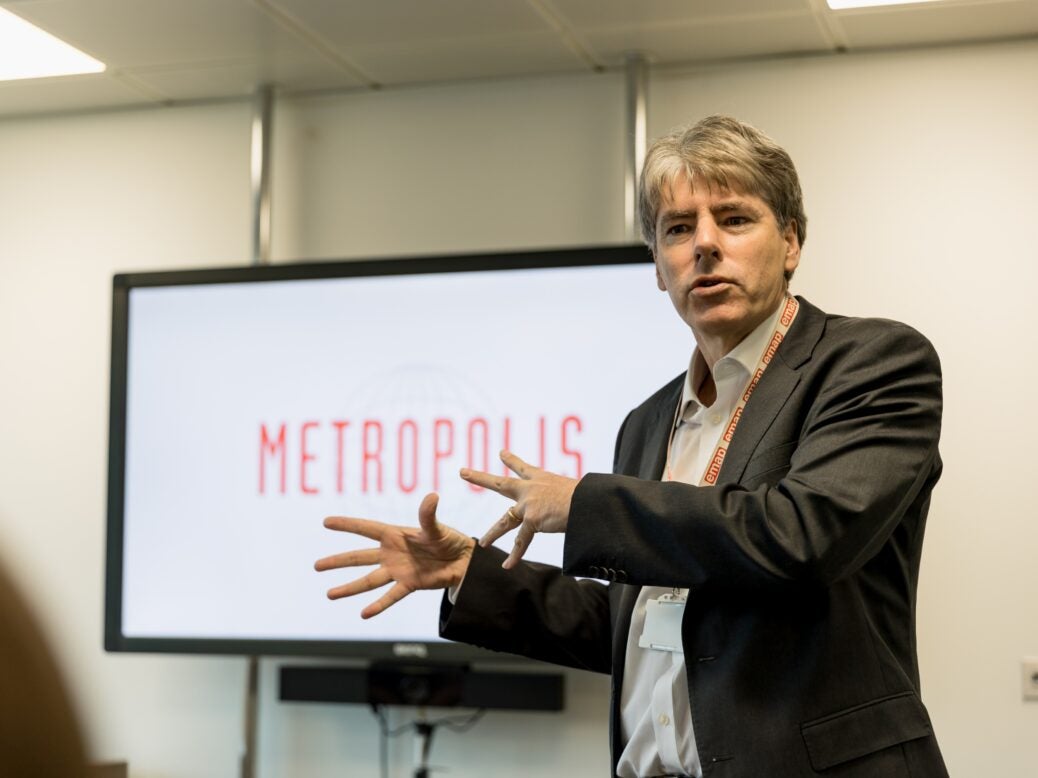
CEO of Metropolis Group Robert Marr says you “can’t make every decision yourself” as a leader but relying on staff “closer to the frontline” can help a publisher understand its audience better.
Marr joined the B2B media and events firm in 2011, overseeing the company’s growth from 160 employees to 500.
Metropolis acquired 11 Emap titles in from Ascential in 2017, including Construction News, Nursing Times and the Architects Journal. It now owns 43 brands in total.
Before joining Metropolis, Marr was the chief operating officer at William Reed Business Media.
What’s been a big turning point/breakthrough moment for you?
More than 20 years ago, leaving my job as finance director at a $1bn city-based global trader William Reed to go to business school, do an MBA and enter politics.
I literally walked around with my resignation letter in my pocket for a week until the last possible moment, hesitating to take the leap. I think my boss thought I was “brave” to jump out of a senior career to be a student again.
A second turning point, two years later: after having fought for and lost a parliamentary seat, I received an unexpected phone call about joining a small, family-owned publisher as group finance director.
A year on, I was invited to expand my remit and take on publishing a magazine, which expanded into a portfolio, then launching events, to then running an international digital business… a transformation from finance bro to media guy.
What’s currently keeping you up at night?
Disintermediation. The decline of volume advertising, with the tech companies eating everyone’s lunch, and suppliers able to reach customers using their own database.
The red zone of unknown eyeballs, clicks, traffic volume, CPM and commoditised web ads is not a safe place to be. It’s time to move to the blue zone of known, engaged audiences of quality decision makers, marketing services that build awareness or contacts and in-person events that build personal connections.
We were 90% red, and we are now getting to maybe 10% red… getting there!
What gets you out of bed in the morning?
Growing and building businesses. It has been hugely motivating with Metropolis/Emap doubling and then doubling again in scale.
In 15 years, we have raced from the Palaeozoic era of us printing maps and classified newspapers to be left in receptions and bins, to the Jurassic Park of content-led print magazines, then the digital world, and now the Quaternary Era of face-to-face, paid information and AI.
Not many industries have navigated through three transformations in that time frame.
How are things going right now, what’s working?
It was great to win Business Media Event of the Year and Team of the Year at the PPA Awards, which perhaps reflects that personality, personalisation and in-person are our focus.
A year ago, we sat down as a team and planned how to react to the new world of AI disruption and declining web traffic.
We set out to build up direct connections to our audiences and to add to the “in-personness” of face-to-face events with a focus on experience and personal networking. This led to the launch of a personality-led newsletter across six subscriber brands, which includes content not aimed at driving clicks, and our Emap app with editorially curated content and a personalised Ask functionality.
Ask uses an AI tool to allow readers to ask a question and generate bespoke answers drawing only on our own editorial content.
What has been your proudest achievement?
In business, building up Emap/Metropolis from a small company to a medium-sized and leading B2B business, building the leadership team and the culture, and creating a long-term future for great brands and events.
In terms of on-the-night experience, I’d say winning magazine of the year at the 2005 PPA Awards, going up on stage as publisher to collect the gong from Joanna Lumley with my amazing editor Rick Pendrous and the wider team.
Biggest mistake, and what did you learn from it?
Not buying a house in London earlier!
But in business, my mistakes have probably been about being too careful with resources – and occasionally making my own life much harder as a result.
A case in point was our 2017 acquisition of the so-called Emap legacy brands, which almost doubled the size of the business, but also leapfrogged us from a small company to a larger group needing to take on and then change big-company systems.
The following 12 months were gritty, with literally hundreds of decisions to be made.
In retrospect, I would have invested in interim chief technology officer support, even at a cost. The wider learning point is that a permanent CTO is a senior partner in a modern business. Not just for the big technology calls but for the huge volume of smaller decisions too.
So, bring in the CTO as soon as you can, and if you can’t, stump up for an interim! More generally, make technology, data and analytics true partners in the business and part of the management team.
When it comes to leading a team, motivating others, what works for you?
I think it’s to be open, interested, and agreeable. Spend some time on where you want to get to – the vision. You don’t know everything, and if you let the other person speak first you might learn something and end up making better calls.
As a CEO with 43 brands to run, you can’t be the oracle or make every decision yourself even if you wanted to. Take the benefit of all the people that are in the business and closer to the front line than senior management, who are likely to have a better take on what the market, reader and customer want.
If you could give your younger self one piece of advice, what is it?
Savour the moment. I have lived by plans most of my life. From the two-decade old plan on my study wall with my long-term objectives – where to own a house, to be CEO of a 500+ person company, or an MP – to annual objectives and daily plans.
But just occasionally, pause. Look around. Maybe at an awards night. On the beach. With family. In the garden. Maybe even in the office. Just spend some time in the moment, not planning.
Who or what inspires you and why?
Margaret Thatcher, for her strategy and execution. I’ve only met her a few times, and when I did, she was doing most of the talking!
Leaving aside the politics, where people have different opinions, and focusing on the approach: to identify a state of nature and current challenges – high inflation, high taxes or whatever – to create a plan, sell in and evangelise that plan, to execute it, to come back and explain it. Just in terms of plan and execution, pretty inspiring.
What is your work mantra?
Create the plan, revise the plan, execute the plan!
Email pged@pressgazette.co.uk to point out mistakes, provide story tips or send in a letter for publication on our "Letters Page" blog
